


{SECTION_MENU}
Science
Science Ambassadors, 2022-2023: 'Our greatest achievement this year was making sure lessons follow the TERRIFICCC principles. For example, making sure they are fun and we work collaboratively.'
Intent of our Science curriculum
The 2014 National Curriculum for Science aims to ensure that all children:
- develop scientific knowledge and conceptual understanding through the specific disciplines of biology, chemistry and physics
- develop understanding of the nature, processes and methods of science through different types of science enquiries that help them to answer scientific questions about the world around them
- are equipped with the scientific skills required to understand the uses and implications of science, today and for the future. We understand that it is important for lessons to have a skills-based focus, and that the knowledge can be taught through this.
At Trotts Hill, we understand that children are naturally curious and we encourage this inquisitive nature throughout their time with us and beyond. Science fosters a healthy curiosity in children about our universe and promotes respect for the living and non-living. We believe science encompasses the acquisition of knowledge, concepts, skills and positive attitudes. Through the programmes of study in the National Curriculum science document, children will acquire and develop these skills throughout their Primary years. We ensure that the Working Scientifically skills are built-on and developed throughout their school career so that they can use equipment, conduct experiments, build arguments and explain concepts confidently, and continue to ask questions and be curious about their surroundings.
A set of five science principles – fun, inspiring, curious, collaborate, creative and communicate – are followed in the delivery of science learning. They aim to give children a love of science and provide them with transferrable skills. Pupils are actively involved by deciding themselves which principles have been met and which ones need more of a profile. Science Ambassadors meet regularly and air their views about science teaching and learning.
We follow the National Curriculum for science which is delivered through a progressive path of knowledge and skills designed by Herts for Learning. These are available for viewing in school on request. The National Curriculum can be viewed via the link below.
Curriculum Overviews


Science Ambassadors
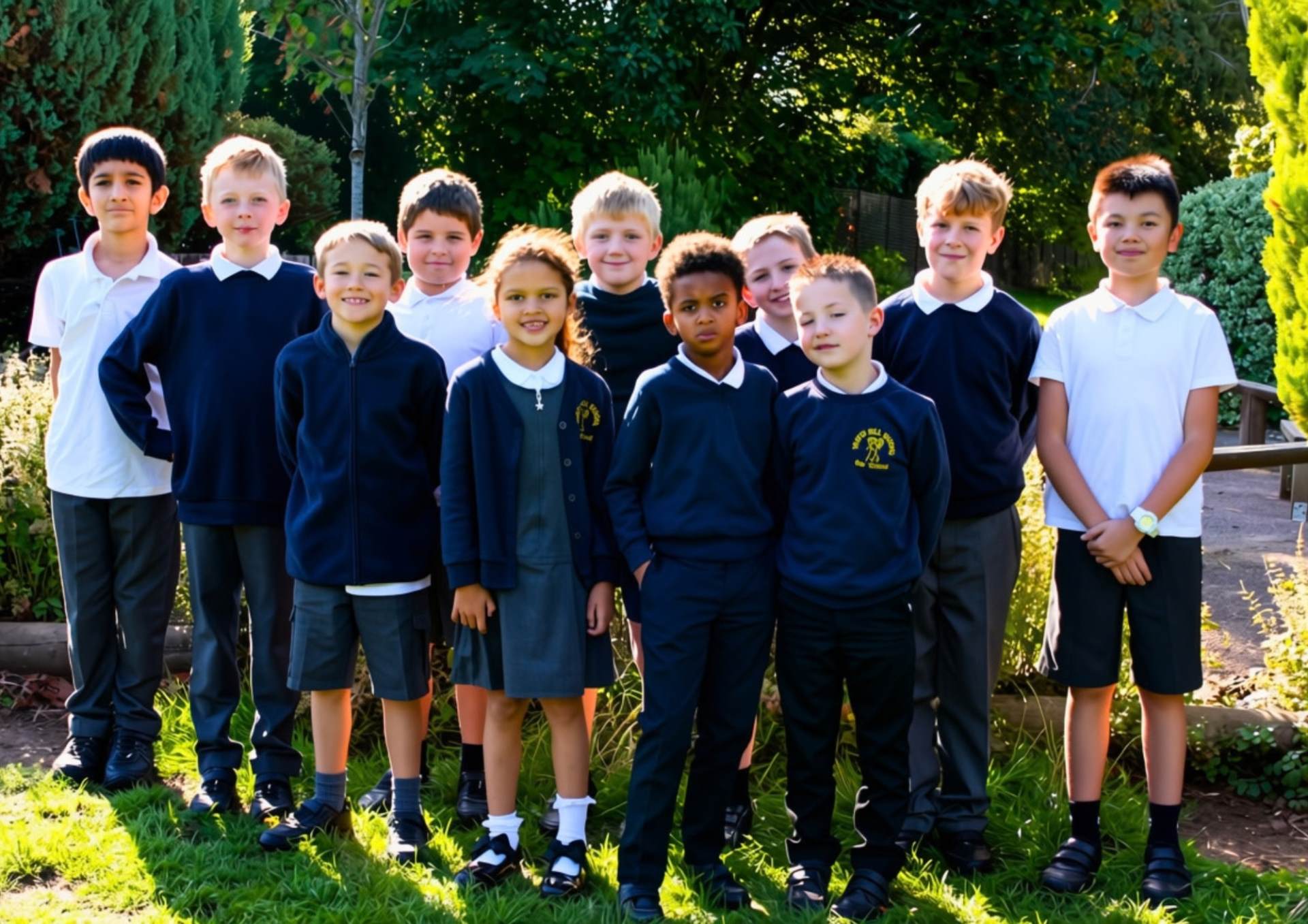
This team of Terrificccc scientists will help the school to follow our principles for scientific learning.
They are responsible for helping teachers to maintain and improve the high standard of science education at Trotts Hill. They monitor their learning experience against the principles listed below.
Science Ambassadors Microscope Workshop
The Science Ambassadors decided that they would like to run lunchtime workshops using microscopes. They supplied the equipment and ran the events themselves.
2026-2027
Year 3
L/I: To explore friction
Year 3 created and carried out an investigation exploring friction. They measured the force used to move different shoes.


Year 4
To start our new science topic of 'Living Things', we worked together to discuss different ways that we could group animals. We had fun trying to guess what criteria the other groups had chosen. There were a range of criteria used, including hot and cold climate, land or sea animals, and bigger than or smaller than a human. We considered how some animals may fit into multiple groups and how this can be shown using Venn and Caroll diagrams.


2025 -2026
Summer
EYFS - Chicks
We have been lucky enough to hatch and care for chicks in the early years. We observed the eggs over time and saw the chicks hatch. We then cared for the chicks and saw how they changed over the 10 days that we had them.
Kangaroo Day - Maths and Science enquiry
The whole school took part in the science and maths activity: Do the children with the longest legs jump the furthest?
Year 1
Year 1 measured their legs and then measured using cubes.


Year 4
Year 4 investigated the question: "Do people with the longest legs jump the furthest?" Some of the class thought that longer legs would mean a longer jump, but others thought that long legs could be a disadvantage as you could trip up more easily. The class enjoyed measuring their leg length and jumping outside to test their theories. They then plotted their data on graphs before drawing their conclusions.


Year 5
The children agreed how to take the leg measurements so the test was fair and decided that they would do a run up to the jump. They found an average and used their graphs to draw a conclusions and suggest why the data is not reliable.


Year 3
Children predicted and gave reasons. They then measured and we created a human graph to show our results.


Year 2 Seeds and Bulbs
Exploring Seeds and Bulbs
Year 2 had a fantastic time this afternoon investigating seeds and bulbs as part of our science learning.
The children carefully dissected a variety of seeds and bulbs, observing them closely and identifying their different parts. We discussed the names and functions of these parts and explored how they help plants grow and develop.
The class also compared the seeds and bulbs, looking for similarities and differences in their structure, size, and appearance. Everyone enjoyed being hands-on scientists and made some excellent observations throughout the afternoon.

Year 5 AstraZeneca visit
L.I To understand the real life applications of science
The children visited AstraZeneca to find out how medicines are made. While on a tour of the site, they used the scenario of the fictitious disease 'unicorniosis' to track the development of a medicine to treat it.


Year 6 Maths/Science Kangaroo day
Year 6 answered the enquiry question: Do the longest legs jump the furthest? They decided how to conduct the investigation, including finding an average, and how to present the data in order to reach conclusion.


Spring
Knex Challenge
Years 5 and 6 took part in the 2026 Knex Challenge to design and build a rocket. The brief was to include detachable boosters and capsule. They worked in pairs, problem solving when their initial ideas didn't work. Congratulations to Alma and Peyton in Year 5 and Ewan and Finley in Year 6, whose model will go through to the next round of the competition.
Year 5 Trip to Airbus
Year 3 Animals including humans
The children worked in groups to sort food items into groups. They used oracy skills to discuss, probe and justify their choices.
Year 5
Using scaled down measurements, the children modelled the relative distance of the planets to the Sun and, having made predictions, considered whether there was any pattern.
Year 6 - Sartorius
Year 6 were extremely lucky to be welcomed by Sartorius to witness science and engineering in action! Year 6 participated in a variety of workshops including: computer aided design, kitting, an experiment involving a robot and building and testing. Year 6 were inspired with many saying they wish to pursue a career in science.
Diya: I really enjoyed my experience at Sartorius. Since I was little, I have always dreamed of being a scientist and finding a cure for cancer so I could change the world. Going to Sartorius felt like bringing my dream closer. I was really interested and curious as I asked questions. Thank you for this experience.
Grace: I give Sartorius a five star rating! I loved it and it made me want to be an engineer when I am older. I got to see the Abr-15 robot and it was very cool. Seeing the 3D printer in action was interesting too!
Tommy: At Sartorius, we saw what is inside of the Abr-15 robot as well as testing it out and we completed a science experiment. I would come again if I could!
Finley: I wish they were hiring 11 year olds!
Year 6
Following reading 'Moth - An Evolution Story', Year 6 tested how animals adaptations can affect their survival rate by conducting an experiment involving different coloured 'caterpillars'. Year 6 used this data to analyse what can affect natural populations.
Autumn
Year 1 Materials
The children investigated what materials were waterproof for Rudolph's coat.
Year 3 - Friction
Year 3 used different objects and surfaces around the classroom to explore friction. They observed which surfaces created more and less friction.
Year 4 Living Things
Year 4 went on an invertebrate hunt around the school grounds. They found earwigs, worms, slugs and spiders and looked closely at them through magnifiers.
Year 6 - Micro-organisms
Year 6 investigated yeast, in order to prove it is a living micro-organism. Combined with water and sugar, the yeast began to feed and respire, producing carbon dioxide thus inflating the balloon. Most found the yeast respired more in hot water. Year 6 made sensible observations throughout as well as collecting measurements to demonstrate this theory.